

Creating quality blog posts individually is an effective long-term content strategy, but scaling organic traffic manually to hundreds of thousands of monthly visits takes years. When your business model relies on low-intent, high-volume searches—such as location landing pages, comparison directories, or database lookups—publishing manually becomes a bottleneck.
Programmatic SEO (pSEO) solves this challenge by combining structured databases with dynamic design templates to automatically publish hundreds or thousands of unique, search-optimized pages.
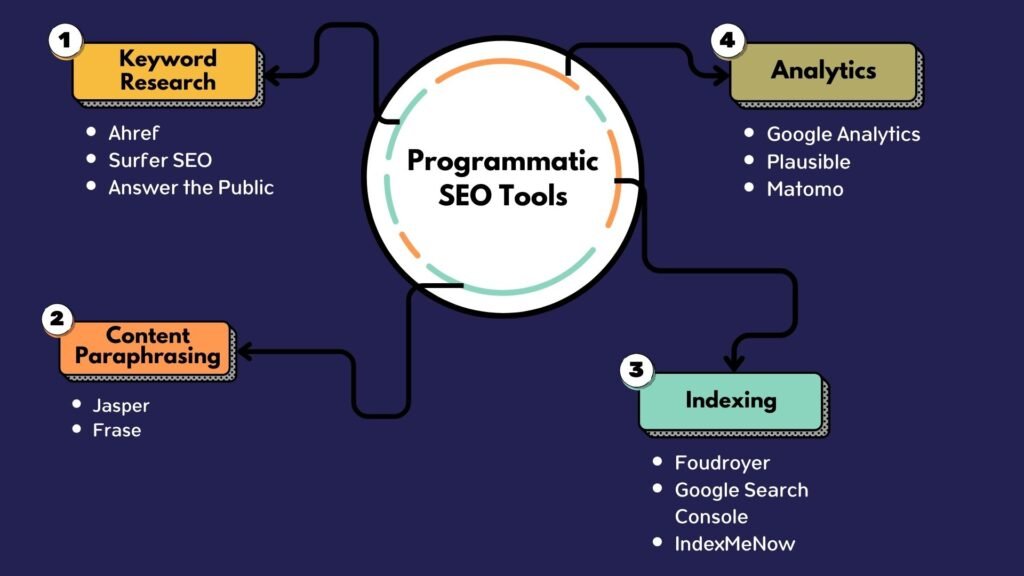
What Is Programmatic SEO?
Programmatic SEO is the practice of automating the creation of landing pages at scale using structured data, custom page design templates, and automated publishing workflows.
Rather than targeting single keywords with long-form manual posts, programmatic SEO targets thousands of long-tail modified keywords following a repeatable formula:
$$\text{Head Term} + \text{Modifier} = \text{Target Query}$$
- Example:
[Best SEO Tools]+[in Austin, TX]= “Best SEO Tools in Austin, TX” - Example:
[Convert]+[USD to BDT]= “Convert USD to BDT Rates”
Manual Publishing vs. Programmatic SEO Architecture
Evaluating when to deploy programmatic SEO versus traditional manual writing depends on your business model and dataset:
| Strategy Aspect | Traditional Manual Content | Programmatic SEO (pSEO) |
| Publishing Speed | 1 to 5 articles per week | Hundreds to thousands of pages instantly |
| Target Keywords | Broad, high-volume competitive terms | Hyper-specific, low-competition long-tail modifiers |
| Data Source | Writer research & manual typing | Relational databases, APIs, CSV datasets |
| Content Uniqueness | High narrative variation | Template-driven with dynamic variables & charts |
| Maintenance | Manual page updates | Universal template updates via code/database |
4 Steps to Build a Programmatic SEO Pipeline
1.Identify Repeatable Keyword Modifiers:Find scalable keyword patterns with high commercial intent.
Conduct keyword research to discover search patterns that follow a predictable formula. Look for modifiers based on locations (“near me”), conversions (“X to Y”), comparisons (“X vs Y”), or directories (“Top tools for X”).
2.Build or Scrape a Structured Dataset:Compile clean, accurate data points to populate your templates.

Recommended Hosting: If you're looking for an affordable, super-fast host with outstanding uptime and 24/7 support, we recommend Hostinger.
Organize your data into clean CSV files or database tables (PostgreSQL, Airtable, or Supabase). Ensure every row contains unique values, such as dynamic statistics, pricing, descriptions, and user ratings to prevent thin content issues.
3.Develop a Dynamic Page Template:Design a flexible design framework with dynamic placeholders.
Design a landing page template in your CMS or web framework (Webflow, Next.js, or WordPress). Replace static text with variable tags (e.g., {City}, {Currency_Pair}, {Average_Cost}) and embed dynamic elements like interactive widgets, visual graphs, or custom tables.
4.Implement Smart Internal Linking & Indexing:Ensure crawlability and prevent index bloat.
Avoid orphan pages by building categorized HTML sitemaps and directory hubs. Link programmatic pages logically from main category hubs, and monitor crawl status via Google Search Console to ensure search engines index your pages smoothly.
Frequently Asked Questions
Q: Will Google penalize programmatically generated pages for duplicate content?
Google does not penalize pages simply because they are built programmatically. However, pages must provide unique value, accurate data, and custom visual elements to avoid being flagged as thin or duplicate content.
Q: How many programmatic pages should I launch initially?
Roll out pages in batches (e.g., 50 to 100 pages first). Test how search engines index and rank the initial batch before publishing thousands of pages at once.
Key Takeaway
Programmatic SEO allows you to capture thousands of long-tail search queries with minimal operational overhead. By combining structured datasets with well-designed templates and solid technical internal linking, you can build scalable search engine traffic that grows automatically.









Rickyh Style School Backpack Travel Bag for Men & Women Lightweight College